





Horse racing is not merely a game of luck; it is a sophisticated "information-intensive sport" that integrates vast datasets, psychological variables, and mathematical probabilities. To ensure profitability and long-term sustainability in modern horse racing, here are the core strategies and tactics categorized into four key perspectives.
1. Mathematical Betting Model: The Kelly Criterion
The most critical tactic is not just picking a winner, but determining "how much to wager." Without proper bankroll management, even a high hit rate can lead to the risk of ruin.
* Calculating Expected Value (EV): Multiply your analyzed win probability ($P$) by the decimal odds ($b$). Only participate in bets where the EV is greater than 1.
* Applying the Kelly Criterion:
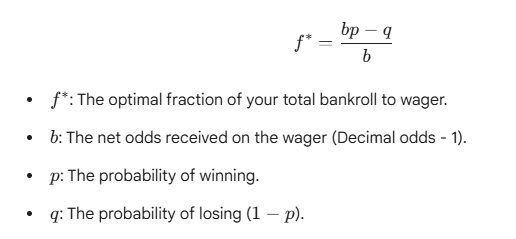
* Practical Application: Since theoretical Kelly values can be volatile, professional bettors often use a "Fractional Kelly" approach (betting 1/2 or 1/4 of the suggested amount) to minimize risk.
2. Data-Driven Tactical Analysis (Handicapping)
Modern handicapping involves transforming unstructured data into structured, actionable insights.
* Leveraging Information Asymmetry: The goal of Value Betting is to identify horses ignored by the public—such as "favorites who were unlucky in their last race" or "underdogs with a tactical advantage" in the current field.
* Track and Environmental Variables: Analyze time-series data such as track moisture levels (moisture content), specific trainer patterns (layoff cycles), and the synergy between the jockey and the horse.
* Pedigree and Development Data: For debut races, build predictive models based on the sire and dam’s distance aptitude and the early speed data of their offspring.
3. Next-Generation AI and Ensemble Model Strategies
Advanced predictive modeling using deep learning and machine learning is becoming the industry standard.
* Ensemble Learning: Combine multiple models, such as Decision Trees and Neural Networks, to reduce bias and optimize variance in predictions.
* Computer Vision Integration: Analyze video data of a horse’s gait, muscular condition, and coat luster in the paddock to quantify their physical condition on race day.
* Real-time Odds Monitoring: Detect "Smart Money"—sudden shifts in the betting pool just before the close—to incorporate insider sentiment or sharp moves into the model in real-time.
4. Risk Management and Sustainability (ESG Perspective)
When approaching horse racing as a tech-driven industry, "Sustainable Betting" is paramount.
* Stop-Loss Principles: Establish algorithmic controls that strictly prohibit wagering beyond a pre-allocated daily budget.
* Addiction Prevention Systems: Utilize behavioral analysis to detect irrational patterns or "chase betting." Implementing self-regulation tactics is a core part of "Care Tech," where technology is used to manage human speculative tendencies.
> Tip: In terms of bet types, consider using Quinella or Trio combinations to distribute probability and lower the volatility of your Return on Investment (ROI), rather than relying solely on Win bets.


